I’ve been making London broil for years, and I can tell you it’s become my go-to when I need dinner on the table fast without sacrificing flavor. This cut gets a bad rap for being tough, but I’ll show you exactly how to turn it into something incredibly tender and juicy. The secret’s in the technique, and once you nail it, you’ll wonder why you ever bothered with expensive steaks.
Why You`ll Love this Perfect London Broil
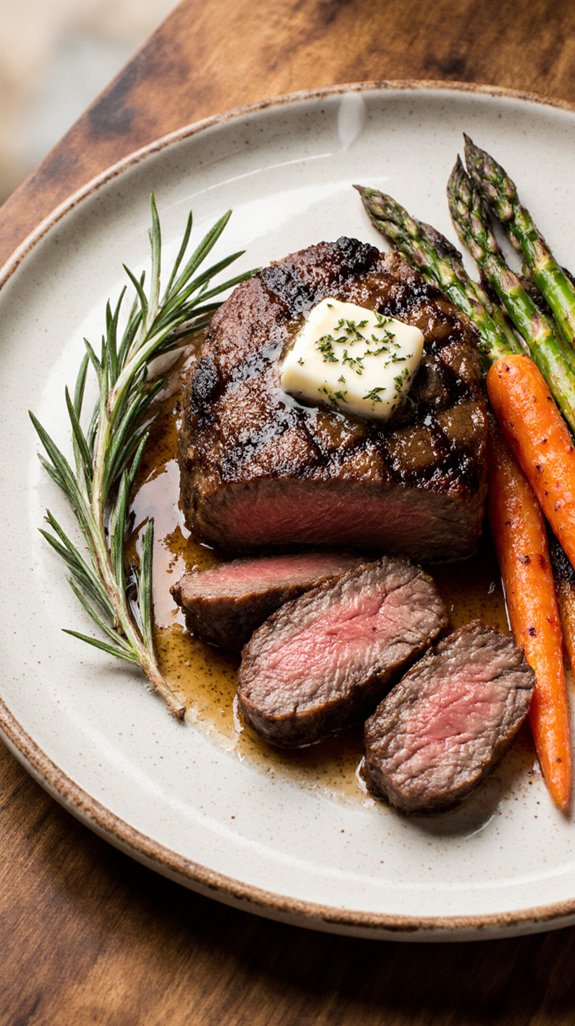
This London Broil recipe delivers restaurant-quality results without the hefty price tag or complicated techniques.
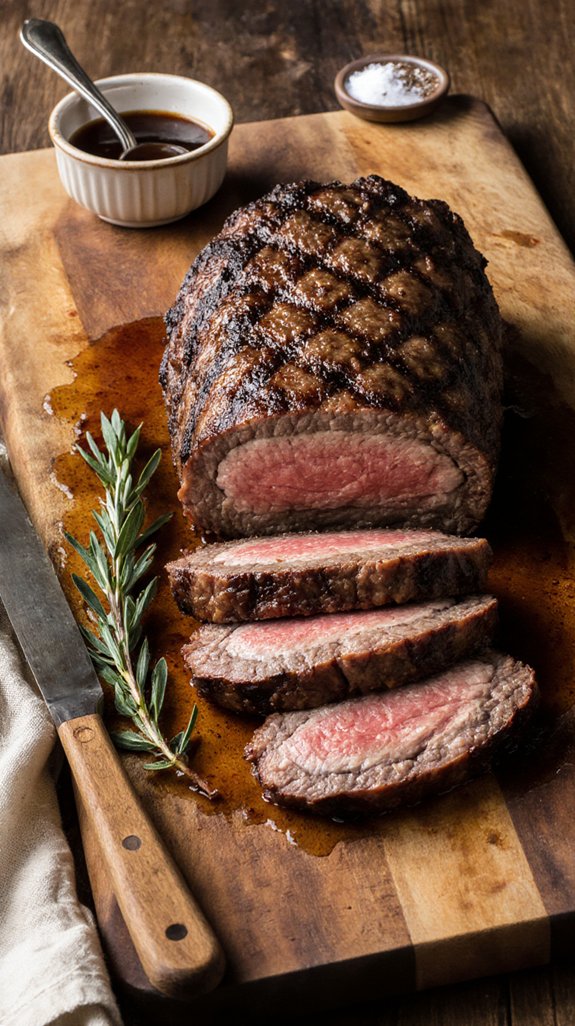
I’m excited to share this method because it transforms an affordable cut of beef into something truly special. The diamond-pattern scoring isn’t just for looks—it creates tender meat by breaking down the muscle fibers while allowing flavor infusion from the garlic-oil marinade.
You’ll appreciate how quickly this comes together, making it perfect for busy weeknights when you want something impressive. The caramelized onions add a sweet, savory element that complements the beef beautifully.
In just twenty minutes of active cooking time, you’ll have a meal that looks and tastes like you spent hours preparing it. That’s the magic of this recipe.
What ingredients are in Perfect London Broil?
The ingredients for this Perfect London Broil are straightforward and accessible, requiring just a handful of items you likely already have in your kitchen. The star of the dish is a quality beef flank steak, complemented by simple but flavorful components that work together to create a memorable meal.
Ingredients:
- 1 lb beef flank steak
- 2 medium onions, thinly sliced
- 1/4 teaspoon salt (for onions)
- 1 tablespoon butter
- 2 tablespoons oil
- 1 teaspoon lemon juice
- 1/2 teaspoon salt
- 1/4 teaspoon pepper
- 2 cloves garlic, crushed
When selecting your ingredients, prioritize the quality of your flank steak—this is the foundation of the dish, so choosing the best cut available will make a noticeable difference in the final result. The oil used can be any neutral cooking oil like vegetable or canola, though you could experiment with olive oil for additional flavor. Fresh garlic cloves that you crush yourself will provide much better flavor than pre-minced alternatives. The onions should be sliced uniformly to guarantee even cooking, and don’t skimp on this component as the caramelized onions truly elevate the entire dish.
How to make this Perfect London Broil

Making this Perfect London Broil is surprisingly simple and comes together in about 15 minutes of active cooking time. Start by preparing your 1 lb beef flank steak with an essential step that helps tenderize the meat and allows the flavors to penetrate—use a sharp knife to score both sides in a diamond pattern, cutting about 1/8 inch deep.
While you’re prepping the meat, get your onions started by cooking your 2 thinly sliced medium onions with 1/4 teaspoon salt in 1 tablespoon butter over medium heat, stirring occasionally until they become tender and fragrant. Keep this mixture warm on the side, as these caramelized onions will be your finishing touch.
Now it’s time to create your flavorful marinade and get cooking. Combine 2 tablespoons oil, 1 teaspoon lemon juice, 1/2 teaspoon salt, 1/4 teaspoon pepper, and 2 crushed garlic cloves in a small bowl, mixing well. Brush half of this mixture onto one side of your scored steak, then place it under the broiler positioned 3 inches from the heat source.
Let it broil for 5 minutes to develop a beautiful crust and lock in those juices. After the first 5 minutes, flip the steak over, brush the second side with the remaining oil mixture, and broil for another 5 minutes for a perfect medium-rare doneness.
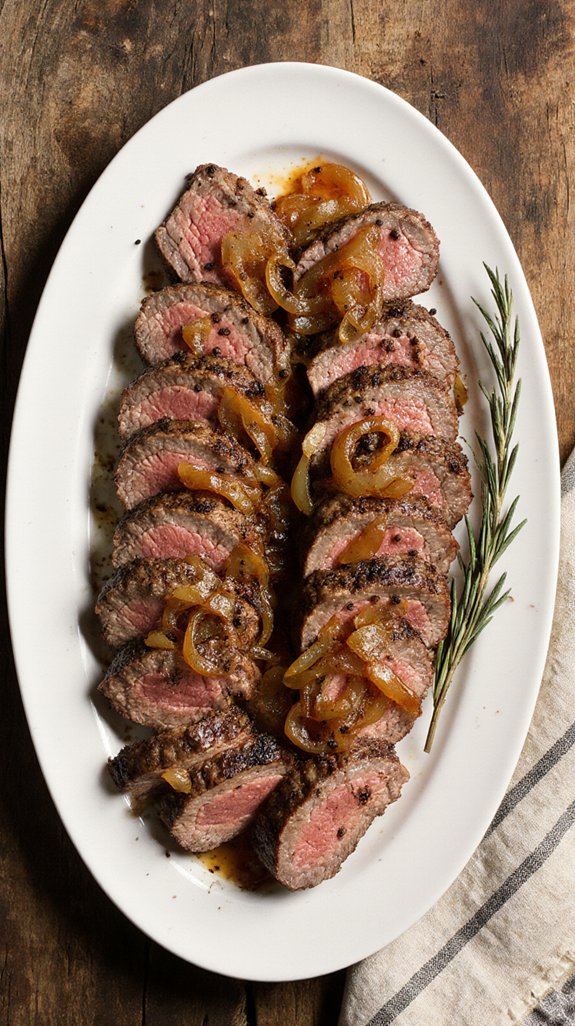
The final step is just as important as the cooking itself—proper slicing makes all the difference in tenderness. Once your steak is done, let it rest for a few minutes, then cut it across the grain into thin slices.
This means you’ll be slicing perpendicular to the direction of the muscle fibers, which shortens them and makes each bite more tender. Arrange your sliced London Broil on a serving platter and top it generously with those warm, buttery onions you prepared earlier for a dish that looks as impressive as it tastes. For even better results, consider investing in a premium cookware set that ensures optimal heat distribution and makes broiling easier than ever.
Shop Related Products

Quality Cast Iron Frying Pan: The Lodge Seasoned Cast Iron Skillet is loved for its great heat retention, incredible durability, and ability to make almost any recipe you dream up

CAST IRON SKILLET is 10.25 inches in diameter and includes red silicone hot handle holder. An improvement on the original: the Lodge Cast Iron Skillet, featuring an assist handle. This will be your go-to pan for generations to come

PREMIUM MATERIAL: This Cast iron dutch oven made of high-quality cast iron core, coated with food grade enamel coating; Durable and sturdy structure, the cast iron core achieves even heat distribution, maximizing the preservation of the original nutrition and taste of the food
Perfect London Broil Substitutions and Variations
While flank steak is the traditional choice for London Broil, you can easily swap it for other cuts like top round or sirloin tip if that’s what’s available at your butcher—just keep in mind that these cuts might need a minute or two less under the broiler since they can be slightly thinner.
I’ve experimented with seasoning swaps too, replacing garlic with fresh rosemary or adding a splash of Worcestershire sauce to the oil mixture for deeper flavor.
If you prefer marinades variations, try soaking your beef in teriyaki or balsamic vinegar for a few hours before cooking.
You can also explore different cooking methods like grilling outdoors when weather permits.
For side dishes, I recommend roasted vegetables, garlic mashed potatoes, or a crisp garden salad to complete your weeknight dinner perfectly.
What to serve with Perfect London Broil
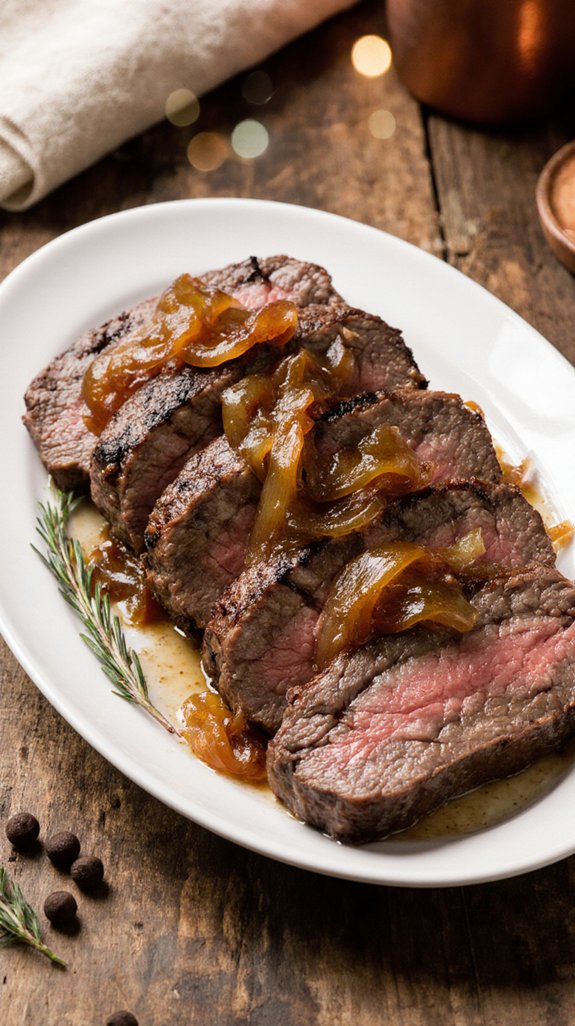
Since London Broil delivers such a bold, savory flavor, I’ve found it pairs beautifully with sides that either complement its richness or provide a revitalizing contrast.
For side dishes, I love serving roasted vegetables like asparagus or Brussels sprouts, which add a slightly charred sweetness. Creamy mashed potatoes balance the beef’s intensity, while a crisp green salad with vinaigrette cuts through the richness perfectly. Garlic bread is always a crowd-pleaser too.
When it comes to wine pairings, I typically reach for a Cabernet Sauvignon or Merlot—their full-bodied character stands up well to the steak’s robust flavor. If you prefer white wine, try a buttery Chardonnay.
These combinations create a complete meal that satisfies without overwhelming your palate.
Shop Related Products

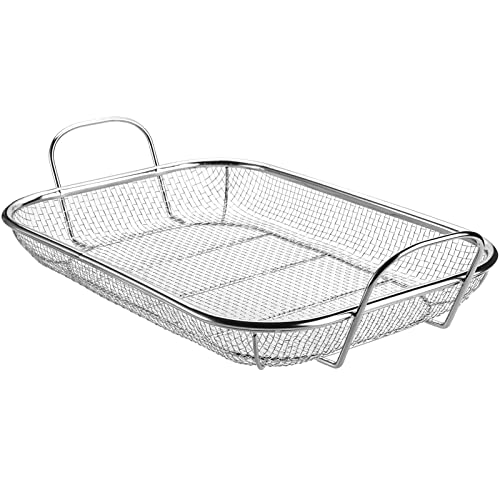
WUWEOT wire mesh roasting pan is made of stainless steel, the frame is thickened and not easily deformed, and the grid mesh bottom is reinforced.

NON-TOXIC CERAMIC COATING: Bake with confidence using this small baking sheet featuring a naturally slick, non-stick baking sheet surface free from PFAS, PFOA, and Teflon. Enjoy healthier baking without harmful chemicals.
Final Thoughts
After you’ve mastered this recipe, you’ll discover that London Broil isn’t just an economical choice—it’s a genuinely impressive dish that brings restaurant-quality results to your home kitchen.
The cooking techniques I’ve shared—from scoring the meat to broiling at the right distance—make all the difference between tough, disappointing beef and tender, flavorful slices.
Don’t hesitate to experiment with flavor enhancements like different marinades or seasoning blends once you’re comfortable with the basics.
I’ve found that even small tweaks, such as adding fresh herbs to the butter-onion mixture or trying smoked paprika in your oil blend, can create exciting variations.
Remember, the key is slicing against the grain and not overcooking.
You’ve got this!
Frequently Asked Questions
Can I Marinate the London Broil Overnight for More Flavor?
Yes, I’d recommend marinating your London Broil overnight for maximum flavor enhancement. These marinade tips will transform your steak: the extended time allows deeper penetration of seasonings, creating a more tender and flavorful result.
What Internal Temperature Should London Broil Reach for Medium-Rare Doneness?
I recommend pulling your London Broil at 130-135°F internal temperature for perfect medium-rare doneness. This cooking technique guarantees ideal meat tenderness, and remember to let it rest five minutes before slicing against the grain.
How Do I Store Leftover London Broil and How Long Does It Last?
I’ll store your leftover London broil in an airtight container in the refrigerator for proper meat preservation. It’ll last 3-4 days when refrigerated. For leftover storage beyond that, I recommend freezing it for up to 3 months.
Can I Cook London Broil in the Oven Instead of Broiling?
Yes, I can confirm oven cooking works as an alternative method. You’ll want to roast at 400°F for about 15-20 minutes for medium-rare, checking with a meat thermometer for doneness.
Why Is It Important to Cut London Broil Against the Grain?
I’ll explain why this cutting technique matters for meat tenderness. When you slice against the grain, you’re shortening the muscle fibers, making each bite easier to chew and considerably more tender than cutting with the grain.